



Parasite
Antiparasitics are a class of medications which are indicated for the treatment of parasitic diseases such as nematodes, cestodes, trematodes, and infectious protozoa.
Parasite Isoform Specific Products
All Product Categories
-
Parasite Related Products (2499)
Related Products (2499)

-
Related Compound Screening Libraries (1)
-
Parasite Isoform Comparison
-
4-Hydroxy-2-methoxybenzamide
 0 ImagesCat. No.: HY-N19238CAS No.: 84224-28-24-Hydroxy-2-methoxybenzamide is a phenolic amide natural product that can be isolated from the mangrove plant Aegiceras corniculatum. 4-Hydroxy-2-methoxybenzamide exhibits moderate antimalarial activity. It also serves as a chemical intermediate. 4-Hydroxy-2-methoxybenzamide can be used in malaria-related research.
-
PAM 1392
 0 ImagesCat. No.: HY-124112CAS No.: 13794-65-5PAM 1392 is active orally against Plasmodium berghei in mice, P. cynofologi and P. knowlesi in monkeys and Trypanosoma cruzi in tissue cultures of mice, and hemolytic streptococci in vitro. PAM 1392 has antimalarial and antitrypanosomal activities, which is proming for rasearch of drug-resistant malaria.
-
1-(26-Hydroxyhexacosanoyl)-glycerol
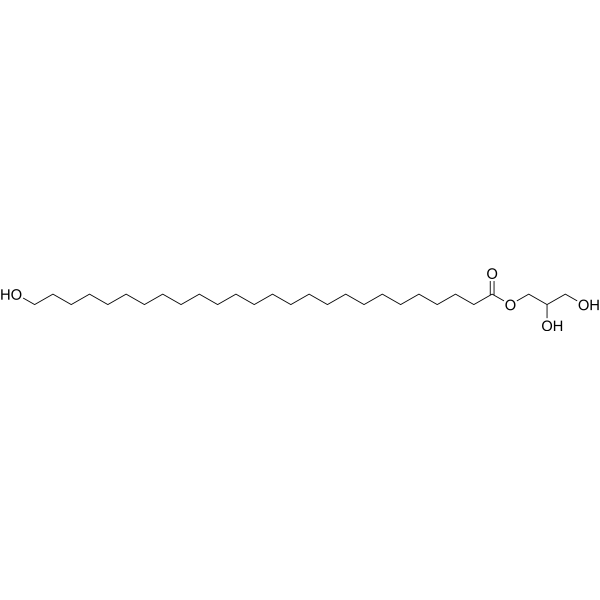 0 ImagesCat. No.: HY-N3957CAS No.: 177602-14-11-(26-Hydroxyhexacosanoyl)-glycerol is a potent antimalarial agent. 1-(26-Hydroxyhexacosanoyl)-glycerol shows antimalarial activity with an IC50 value of 9.48 µM for Plasmodium falciparum.
-
DHODH-IN-29
 0 ImagesCat. No.: HY-175259CAS No.: 212375-00-3DHODH-IN-29 (Compound 2i) is a covalent inhibitor of Leishmania braziliensis Dihydroorotate Dehydrogenase (LbDHODH) with an IC50 value of 0.5 μM. DHODH-IN-29 is promising for research of antileishmaniasis.
-
1-Deacetylnimbolinin B
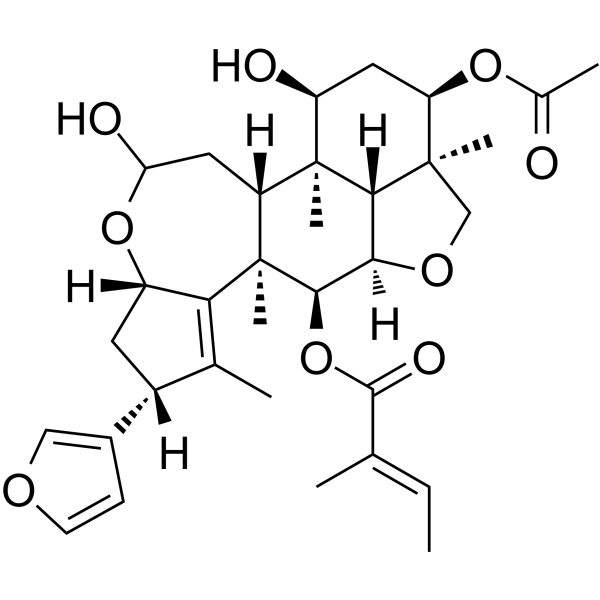 0 ImagesCat. No.: HY-N1621CAS No.: 76689-98-01-Deacetylnimbolinin B is a nimbolinin-type limonoid isolated from the fruits of Melia toosendan. Limonoids are a class of highly oxygenated nortriterpenoids that exhibit insecticidal, antifungal, nematicidal and cytotoxic properties.
-
AcrB-IN-4
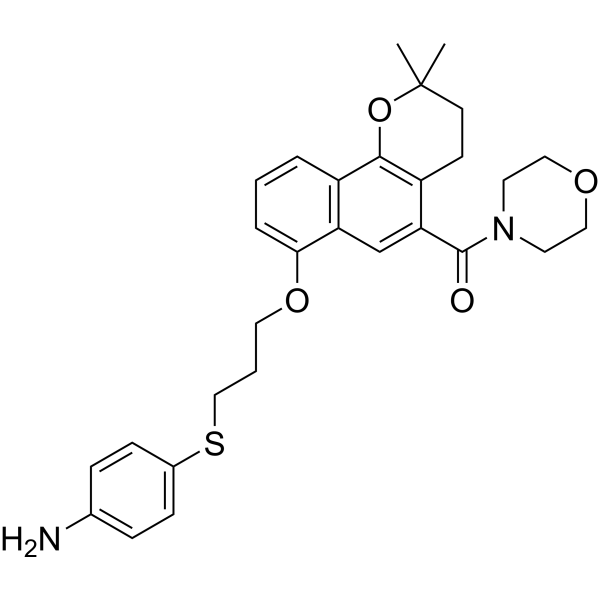 0 ImagesCat. No.: HY-149812CAS No.: 2890177-95-2Efflux pump-IN-4 is an AcrB efflux pump inhibitor, with ability to potentiate the effect of antibiotics. Efflux pump-IN-4 inhibits Nile Red (a known substrate of AcrB) efflux. Efflux pump-IN-4 does not disrupts the bacterial outer membrane nor display toxicity in a nematode model.
-
Dymanthine
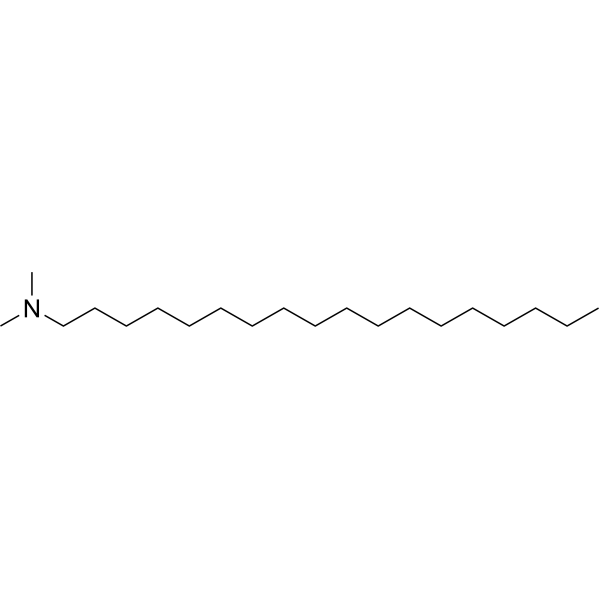 0 ImagesDymanthine (N,N-Dimethyloctadecan-1-amine) is a broad-spectrum intestinal anthelmintic. Dymanthine is used in research related to various helminth infections (Ascaris lumbricoides, Trichuris trichiura, and Ancylostoma duodenale).
-
Antifungal agent 26
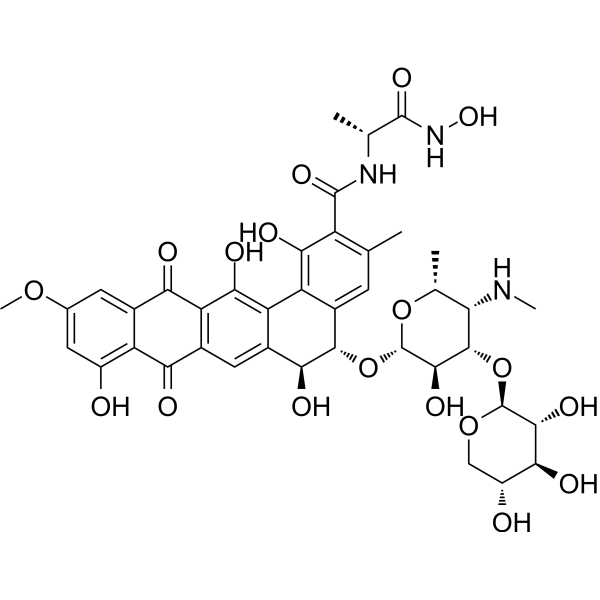 0 ImagesCat. No.: HY-146747CAS No.: 2769834-78-6Antifungal agent 26, a Pradimicin A derivative, shows antifungal, antiviral, and antiparasitic activities through binding to d-mannose (Man)-containing glycans of pathogenic species.
-
cis-Atovaquone-d4
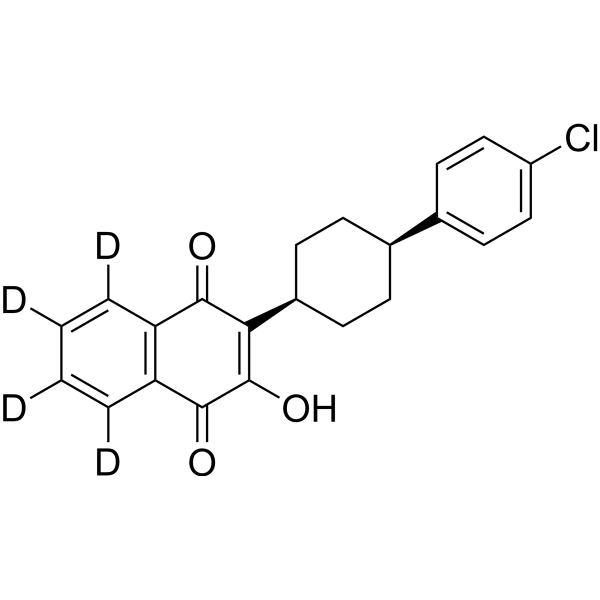 0 ImagesCat. No.: HY-13832S3Synonyms: cis-Atavaquone-d4cis-Atovaquone-d4 is deuterium labeled Atovaquone. Atovaquone (Atavaquone) is a potent, selective and orally active inhibitor of the parasite’s mitochondrial cytochrome bc1 complex. Atovaquone is against human and P. falciparum cytochrome bc1 activity with IC50 values of 460 nM and 2.0 nM, respectively. Atovaquone is an antimalarial agent and has the potential for the investigation of neumocystis pneumonia, toxoplasmosis, malaria, and babesia[1][2].
-
Panowamycin B
 0 ImagesCat. No.: HY-N16437ACAS No.: 1375224-56-8Panowamycin B is an isochroman compound that can be produced by Streptomyces sp. K07-0010. Panowamycin B exhibits antitrypanosomal activity against the Trypanosoma brucei brucei GUTat 3.1 strain (IC50: 3.30 μg/mL). Panowamycin B shows weak cytotoxicity towards human fetal lung fibroblast MRC-5 cells (IC50: 13 μg/mL). Panowamycin B can be used for research in the field of antitrypanosomal studies.
-
Hycanthone aldehyde
 0 ImagesCat. No.: HY-W673618CAS No.: 3613-13-6Hycanthone aldehyde (XII) is a thioxanthone derivative of lucanthone that exhibits anti-tapeworm activity and potential anticancer activity.
-
Kijimicin
 0 ImagesCat. No.: HY-123444CAS No.: 129297-22-9Kijimicin is a polyether ionophore antibiotic originally discovered in Actinomadura sp. MI215-NF3. inhibits HIV-1 replication and reduces the infectivity of progeny viral particles. Kijimicin exhibits inhibitory activity against intracellular T. gondii (IC50 = 45.6 nM), extracellular parasites (IC50 = 216.6 pM) and C. parvum (IC50 = 7.7 nM), and controls acute T. gondii infection in mice. Kijimicin can be used for research on HIV, toxoplasmosis, cryptosporidiosis, and bacterial infections.
-
Cinchonine (Standard)
 0 ImagesSynonyms: (8R,9S)-Cinchonine (Standard); LA40221 (Standard)Cinchonine (Standard) is the analytical standard of Cinchonine. This product is intended for research and analytical applications. Cinchonine is a natural compound present in Cinchona bark with antimalarial, antitumor, anti-inflammatory, anti platelet-aggregation and anti-obesity properties. Cinchonine inhibits cells proliferation and autophagy and induces apoptosis through activation of Caspase-3. Cinchonine activates endoplasmic reticulum stress-induced apoptosis in human liver cancer cells.
-
Ro 13-3978
 0 ImagesCat. No.: HY-W054427CAS No.: 70842-04-5Ro 13-3978 is an orally active antischistosomal agent. Ro 13-3978 exhibits excellent in vivo antischistosomal activity against juvenile and adult Schistosoma mansoni infections. Ro 13-3978 shows no in vivo activity against E. caproni and F. hepatica. Ro 13-3978 blocks dihydrotestosterone-induced proliferation of androgen-dependent cells. Ro 13-3978 can be used in research related to schistosomiasis.
-
ELQ-453
 0 ImagesCat. No.: HY-174342ELQ-453 is an inhibitor targeting the Qo site of the Plasmodium falciparum cytochrome bc1 complex (CytB) with an IC50 value of 0.57 nM. ELQ-453 blocks the mitochondrial function of the parasite, and suppresses Plasmodium infection in mosquitoes. ELQ-453 is promising for research of malaria.
-
Mammea A/BA
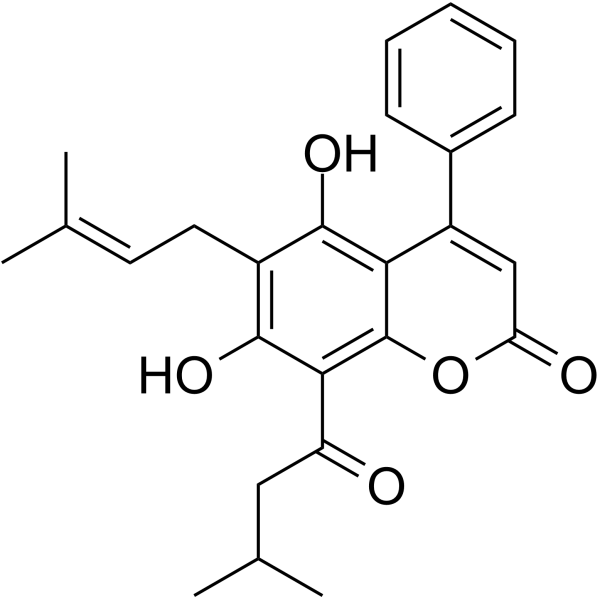 0 ImagesMammea A/BA has potent activity against Trypanosoma cruzi (T. cruzi). Mammea A/BA induces mitochondrial dysfunction, reactive oxygen species (ROS) production and DNA fragmentation, and increases number of acidic vacuoles. Mammea A/BA can induce apoptosis, autophagy and necrosis. Mammea A/BA can be used for researching chagas disease.
-
Teclozan
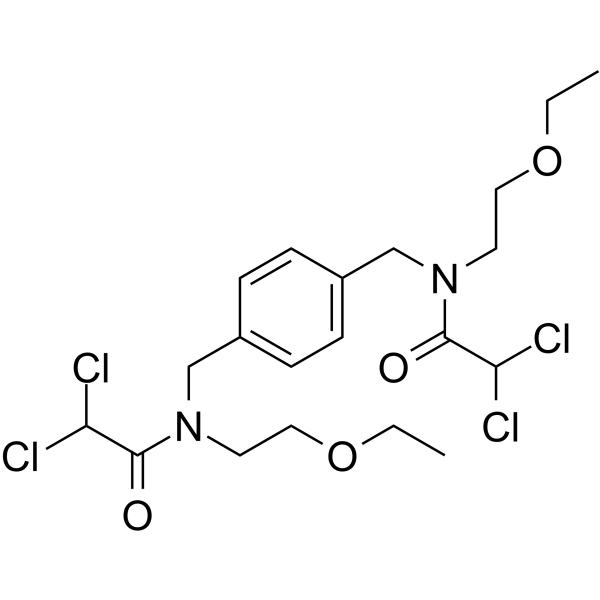 0 ImagesTeclozan (WIN 13146) is an antiprotozoal agent, class in benzylamine derivatives. Teclozan intervenes in the phospholipid metabolism preventes the formation of arachidonic acid. Teclozan acts in the intestinal lumen being effective in Anti-G. intestinalis. Teclozan can be used for the research of protozoan infections.
-
Isoschaftoside (Standard)
 0 ImagesCat. No.: HY-N1458RCAS No.: 52012-29-0Isoschaftoside (Standard) is the analytical standard of Isoschaftoside. This product is intended for research and analytical applications. Isoschaftoside, a C-glycosylflavonoid from Desmodium uncinatum root exudate, can inhibit growth of germinated S. hermonthica radicles. Isoschaftoside reduces reactive oxygen species (ROS) and induces proliferation in senescent cells. Isoschaftoside activates autophagy. Isoschaftoside can be used for anti-tumor, anti-inflammatory, antioxidant, antihypertensive, hepatoprotective and nematicidal study.
-
ELQ-596
 0 ImagesCat. No.: HY-163482CAS No.: 3023709-98-7ELQ-596 is a quinolone derivative, that exhibits antimicrobial activity against several protozoan parasites, including the intraerythrocytic parasites Plasmodium and Babesia. ELQ-596 attenuates babesiosis in immunosuppressed mice.
-
Antileishmanial agent-5
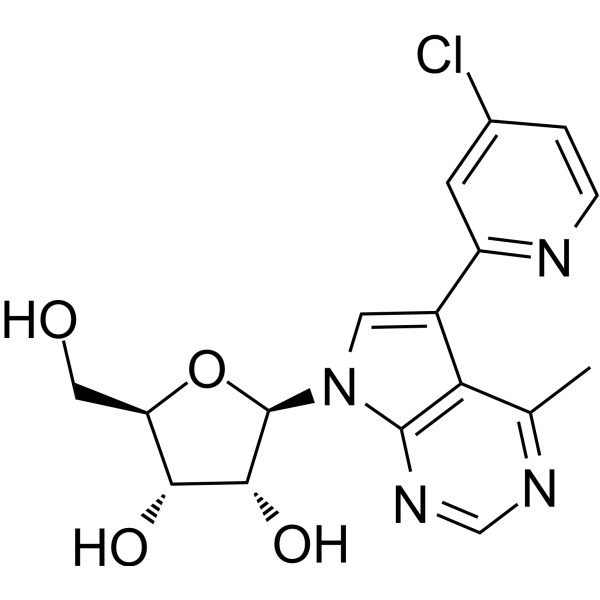 0 ImagesCat. No.: HY-146745CAS No.: 2922333-29-5Antileishmanial agent-4 is a ribonucleoside analogue and acts as an antileishmanial agent. Antileishmanial agent-4 is against L.infantum and T.cruzi with EC50 values of 0.68 μM and 0.83 μM, respectively.



